As Shenzhen prepares to host the 2026 APEC Economic Leaders' Meeting, the city once again finds itself in the global spotlight. Known as a "city of miracles," Shenzhen continues to attract international attention and visitors. Recently, China News Service interviewed Jiang Han, Vice Chairman of XGD.Inc, exploring how the Shenzhen-based company is helping bring Chinese payment standards to the global stage.
Source: China News Service | Reporter: Wang Hua
Original headline: "Shenzhen Companies Bring Chinese Payment Standards to the World"
The 33rd APEC Economic Leaders' Meeting will soon take place in Shenzhen, drawing global attention to the city and welcoming an increasing number of international visitors. For travelers accustomed to cash or card payments, how easily will they adapt to China's increasingly cashless society? Jiang Han, Vice Chairman of Shenzhen XGD.Inc Co., Ltd. (XGD.Inc), believes there is little cause for concern: Chinese payment standards are already making their mark around the world.
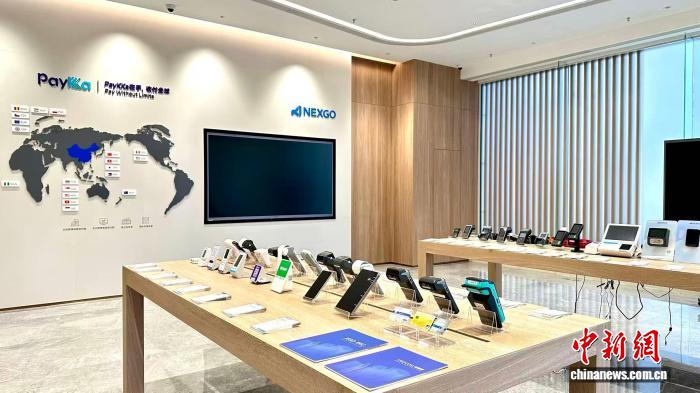
XGD.Inc is a leading global digital payment technology company, with business operations spanning more than 100 countries and regions. In a recent interview with China News Service, Jiang introduced the company's two core businesses: payment terminal manufacturing, which has ranked among the world's top 10 by shipment volume for multiple consecutive years, with most products exported overseas; and payment acquiring services.
"Across both businesses, we have made significant progress—from complying with international standards to actively participating in their development," Jiang said.
PCI certification demonstrates a company's compliance with the Payment Card Industry Data Security Standards. For payment terminal manufacturers seeking to connect with international card schemes, PCI and other industry certifications are essential requirements. XGD.Inc has been deeply involved in successive updates to PCI standards.
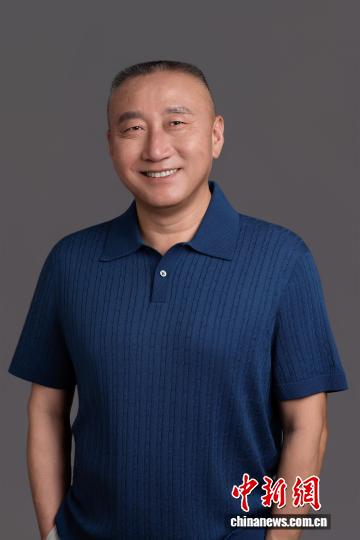
According to Jiang, through close engagement with the PCI Standards Committee and independent security testing laboratories, XGD.Inc helped develop the certification framework for MPoC (Mobile Payments on COTS), the PCI security standard for mobile payment solutions using commercial off-the-shelf devices. In January 2024, the company obtained the world's first MPoC Software Product Certification.
XGD.Inc has also contributed to the development of standards for payment terminal security and digital renminbi hardware wallets, marking a shift from exporting products to helping shape industry rules. Technical solutions incorporated into relevant standards include the protection strength of device boot trust root keys, system firmware signing mechanisms, cryptographic key strength, and high-security key injection solutions.
This role has been particularly evident in the international expansion of digital renminbi services in Southeast Asia. Given the region's diverse currencies, local payment networks, and regulatory frameworks, XGD.Inc worked with China UnionPay and local acquiring institutions to adapt payment terminals and enable interoperability. By extending solutions already validated in large-scale domestic applications to overseas markets, the company helped establish replicable regional models that can contribute to the development of international standards.
Jiang explained that the path from compliance to standard-setting participation begins with staying closely aligned with international standards, bringing compliant products to market promptly, and providing proven solutions and timely, high-quality feedback. As international standards organizations recognize these contributions, companies gain opportunities to share their expertise and participate in discussions on future standards and revisions.
"Participating in international standard-setting allows us to better understand the direction of future development and bring China's perspectives and solutions to the global stage," Jiang said.
Jiang also noted that Chinese companies, including those based in Shenzhen, face technical, procedural, and trust-related barriers when participating in international standard-setting. Building trust, in particular, takes time and sustained engagement. Overseas Chinese networks and resources can play an important role in this process.
"When entering international markets, we often prioritize cooperation with local Chinese community networks, including business associations, community leaders, and Chinese entrepreneurs," Jiang said. "They have an in-depth understanding of local political, economic, and cultural environments, as well as financial regulatory requirements. More importantly, they can help us connect with the business resources we need."
In some overseas markets, XGD.Inc does not pursue direct business expansion. Instead, it works with local Chinese partners to establish manufacturing operations, set up joint ventures, or appoint authorized distributors.
"Our cooperation model varies according to the characteristics of each country and region. Close partnerships with overseas Chinese communities have enabled us to establish a presence in international markets more efficiently," Jiang explained.
Looking ahead, Jiang hopes that more Chinese companies expanding overseas will move beyond exporting products toward contributing to the development of international rules and standards. By gaining a stronger voice in global competition and standard-setting, Chinese enterprises can help transform the strengths of Chinese manufacturing into internationally recognized standards and contribute to shaping the future of global markets.
From product exports to participation in international rule-making, XGD.Inc's progress reflects not only the results of its long-term global expansion, but also the growing presence of Chinese payment technology on the world stage. Behind its contributions to international standards lies years of technological investment and practical experience, as well as the steady advancement of Chinese solutions into global markets.
Looking ahead, XGD.Inc will continue to contribute Chinese expertise and perspectives to international standard-setting, striving to make "Made in China" a benchmark for quality and innovation in the global marketplace.