Originally published by Caixin.
Original headline: "Cross-Border Payments Enter a New Era of Essential Demand: How Has PayKKa Emerged as a Fast-Growing Challenger?"
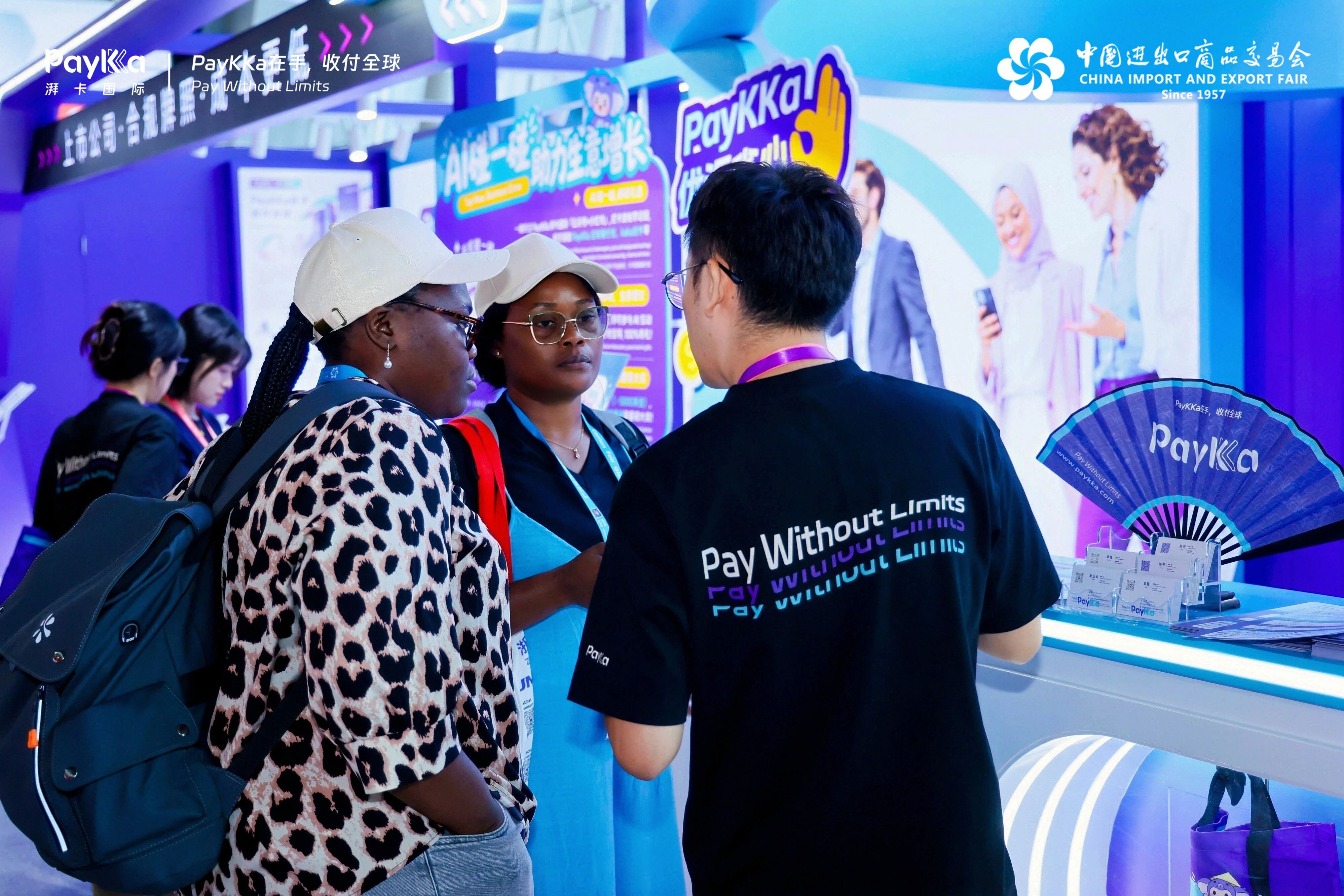
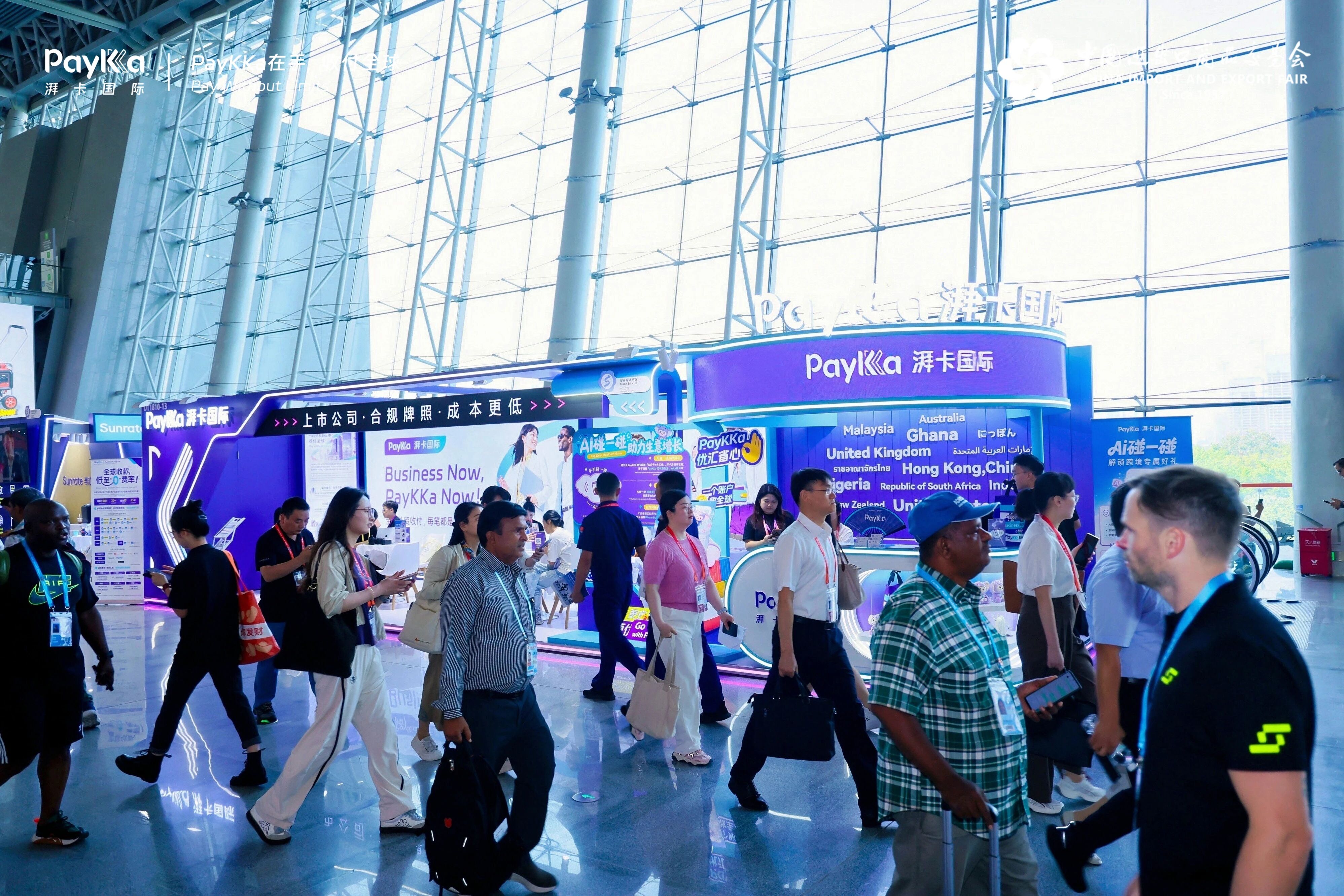
At the 140th China Import and Export Fair (Canton Fair), buyers from ASEAN and African markets are becoming an increasingly prominent presence. Behind the bustling exhibition halls lies a clear business challenge: while emerging markets offer substantial new export opportunities, companies continue to face obstacles in collecting large B2B payments, managing foreign exchange, and meeting compliance requirements. For many exporters, the ability to collect payments has become just as important as securing orders. An order does not automatically translate into a completed transaction; without reliable payment channels, business opportunities can remain out of reach.
Against this backdrop, PayKKa, the cross-border payment brand of Shenzhen-listed XGD.Inc (300130.SZ), recorded a 534% year-on-year increase in transaction volume from January to September 2026, while its active customer base grew by 60%. Its performance has made it one of the emerging players attracting attention in the cross-border payments sector.

More noteworthy than its growth rate is the strategy behind it. Rather than treating cross-border collections as a standardized payment channel, PayKKa starts with the practical challenges businesses face in emerging trade markets such as Africa and Southeast Asia. It has developed tailored payment solutions around local currencies, clearing systems, and specific trade scenarios, while leveraging its global collection network to expand into international card acquiring for independent websites and payment collection for cross-border e-commerce platforms.
As global trade patterns evolve, payments are no longer simply a back-end step after an order is secured. They have become essential infrastructure that determines whether transactions can be completed across different markets and business models. PayKKa's growth reflects this fundamental shift in demand for cross-border payment services.
Changing Market Needs:
Why Cross-Border Payments Have Become Essential
The shift is particularly visible at trade exhibitions.
In recent years, buyers from ASEAN and African countries have accounted for a growing share of visitors at the Canton Fair. During the exhibition, PayKKa conducted a survey of participating merchants and found that many were asking similar questions: What if buyers can only pay in local currencies such as the Nigerian naira or Ghanaian cedi? How can businesses manage inventory financing when payments take two or three weeks to arrive? What happens if funds are frozen after using informal foreign exchange channels?
These concerns point to a broader issue. Businesses are no longer simply asking whether an individual payment can be received. They need to know whether their existing payment arrangements can reliably support sustained growth in emerging markets.
China's trade data highlights the scale of this shift. In 2025, China's imports and exports with Africa grew by 18.4% year on year, while trade with ASEAN increased by 8%, making both regions important sources of foreign trade growth. In the first half of 2026, China-Africa trade grew by a further 19.6%. As export opportunities increasingly move toward emerging markets, however, these are also some of the most challenging regions in which to collect payments. The critical variable is often not the order itself, but the currency in which the buyer can pay.
Market research indicates that traditional USD telegraphic transfers (TT) to Africa typically take five to 14 business days. In Nigeria, foreign exchange quota restrictions mean that some buyers must wait in line to purchase foreign currency, with settlement taking more than 20 days in extreme cases. In Southeast Asia, Vietnam's September 2025 removal of cash settlement for border trade pushed merchants toward bank-based channels, extending payment collection periods to seven to 10 days in some cases.
When buyers cannot readily obtain US dollars, exporters are left with two difficult choices: risk losing the order or accept payment in local currency. Without compliant collection channels, some may turn to informal foreign exchange arrangements.
The risks do not end there. Personal accounts used for payment collection, missing logistics documentation, and payments split across multiple transfers can all make it difficult to verify the source of funds and the underlying trade transactions. Even when funds eventually arrive, multiple currency conversions and intermediary bank fees along USD transfer routes can further erode profit margins.
According to PayKKa's estimates, combined foreign exchange losses typically range from 2% to 3.5%, while merchants using parallel-market currency exchange may face losses of 4% to 7%. One Nigerian exporter of photovoltaic materials and building supplies described the uncertainty: with order payment cycles often lasting two to three months, the company has to monitor the naira exchange rate every day. "The profit we calculate when signing a contract may look very different by the time the payment arrives."
These challenges are reshaping competition among payment providers. In the past, businesses may have focused primarily on transaction fees. Today, as trade shifts toward emerging markets, delayed payments, foreign exchange losses, and compliance risks are becoming interconnected concerns. The ability to collect payments reliably has become the final gateway to completing an order.
Cross-border payments are therefore moving from a matter of provider preference to a business necessity. Competition is also shifting beyond pricing toward the ability to adapt solutions to the specific requirements of different markets and trade scenarios.
Addressing Real-World Challenges with Differentiated,
End-to-End Payment Solutions
As the cross-border payments industry matures, the differences between service providers are increasingly reflected not only in licensing and geographic coverage, but also in their ability to serve specific business scenarios.
Emerging markets require solutions for limited access to US dollars, local-currency collections, and trade compliance. In more mature markets across Europe and North America, international bank transfers may be relatively straightforward, but businesses still need local payment options, support for multi-platform operations, and centralized fund management.
In response, PayKKa is moving beyond a single-channel payment model toward a broader offering that combines multiple payment routes, diverse business scenarios, and global coverage.
Its core capabilities span four areas: B2B trade collections and cross-border platform collections; international card acquiring and local payment methods for independent websites; multi-currency conversion, settlement, and payments; and integrated value-added services such as supply chain finance and foreign exchange settlement declarations.
B2B trade collections remain PayKKa's primary business focus and offer a clear perspective on how the company develops solutions around specific market needs. Independent website acquiring and cross-border e-commerce collections extend these capabilities to a wider range of business models, demonstrating how its global account and payment infrastructure can support different operating scenarios.
Nigeria provides a practical example of PayKKa's localized approach. The company has launched local collection services in Nigerian naira (NGN), allowing buyers to pay directly in their local currency. Funds are processed through local clearing networks and can arrive as quickly as T+0. Merchants can also convert or settle NGN directly into Chinese yuan (CNH), without first converting the funds into US dollars.
Compared with the five-to-14-business-day timeframe for traditional USD telegraphic transfers—and waiting periods exceeding 20 days in extreme cases—the value of local-currency collection goes beyond faster settlement. It removes obstacles on both sides of a transaction, reducing the need for buyers to obtain foreign currency and making it easier for exporters to receive funds. Transactions that might otherwise be difficult to complete can become commercially viable.
PayKKa's trade collection services extend beyond simply receiving funds. The accounts it provides are virtual accounts (VAs), including global multi-currency collection accounts and local-currency accounts.
Designed for scenarios involving large payments, extended settlement cycles, multiple payers, and complex supply-chain reconciliation, these VA accounts support localized collections, payer identification, fund consolidation, and automated reconciliation. This helps businesses link incoming funds more accurately to specific orders and underlying trade transactions.
Combined with foreign exchange conversion, settlement, outgoing payments, and foreign exchange declaration services, these accounts are evolving from basic collection tools into integrated fund management hubs. This marks an important step in PayKKa's expansion from payment processing into broader business services.
Emerging markets provide an important starting point for developing localized services, but they do not define the limits of PayKKa's business.
The company currently supports collections, payments, and foreign exchange settlement in more than 20 major currencies, with direct local-currency collections available in 10 overseas currencies. Its payment network covers more than 190 countries and regions.
In Europe, PayKKa leverages its Luxembourg PI license to strengthen local account services and support collections and payments in less widely used currencies. In Africa, it is developing services around currencies including NGN, GHS, and ZAR. In North America and Oceania, its collection network covers markets such as the United States, Canada, Australia, and New Zealand.
By combining a global account infrastructure with localized capabilities in key regions, PayKKa helps businesses reduce the need to establish separate payment arrangements when entering new markets.
While its global collection network provides businesses with access to funds across markets, international expansion also involves different operating models, including independent websites and cross-border e-commerce platforms. PayKKa is extending its payment capabilities to support these diverse needs.
Its independent website acquiring services cover both physical goods and digital content businesses expanding overseas, including short-form drama and gaming. These sectors have distinct transaction characteristics. Digital entertainment businesses often process frequent, low-value payments from users worldwide and require multi-level revenue sharing. Gaming businesses may also face fragmented transaction patterns and relatively high chargeback rates.
As a result, acquiring capabilities cannot be measured simply by the number of supported payment methods. Providers must also accommodate local payment preferences and adapt transaction processing and risk management strategies to the needs of different industries.
To address these requirements, PayKKa provides global acquiring, fund clearing, split-payment settlement, and cross-border payout services, while optimizing payment and risk control strategies according to local market conditions and transaction profiles.
Its supported payment methods include cards issued by the five major international card schemes, such as Visa and Mastercard, as well as leading regional e-wallets in Southeast Asia, including GrabPay and Boost. Through a unified payment aggregation solution, businesses can access major local card networks and e-wallets across multiple markets through a single integration, helping improve payment success rates and cross-border fund management efficiency.
This approach extends acquiring beyond the consumer payment stage to cover fund clearing, settlement, and distribution—better aligning payment services with the high-frequency transactions and multi-level revenue-sharing models common in digital entertainment and gaming.
PayKKa also supports collections from major cross-border e-commerce platforms, including Amazon and TikTok Shop, enabling merchants to receive multi-currency sales proceeds and consolidate funds across different platforms, stores, and markets.
B2B trade collections demonstrate the depth of PayKKa's market-specific capabilities, while independent website acquiring and cross-border platform collections broaden its service coverage. Its integrated "payments plus services" model further connects payment capabilities with business operations. Turning these capabilities into sustainable growth, however, requires a carefully balanced approach to global expansion and local market development.
From Regional Expertise to Scalable Capabilities:
PayKKa's Next Stage of Growth
Cross-border payments depend heavily on licensing and local clearing and settlement networks. Achieving both broad global coverage and deep local market expertise can therefore be challenging.
Song Jing, Vice President of XGD.Inc, explains:
"PayKKa does not pursue geographic coverage for its own sake, nor does it aim to independently establish a complete licensing and local network infrastructure in every market. Instead, we prioritize investment based on customer needs, transaction volumes, and market potential. By developing core capabilities in-house while partnering with local networks, we seek to balance global reach, service depth, and operational efficiency."
For an emerging player, this approach offers a more practical path than simply expanding the number of markets served. Core capabilities are developed and managed centrally, while local networks are progressively strengthened according to market demand.
This strategy is first reflected in the development of PayKKa's compliance and clearing infrastructure. Using its own key licenses—including Hong Kong's MSO, Luxembourg's PI, and the US MSB licenses—as strategic anchors, the company is building a unified compliance and technology platform.
In priority markets, PayKKa works with locally licensed payment institutions and banks to connect to domestic clearing channels and establish local VA collection accounts. This enables funds to be received in their original currencies and settled more efficiently.
Under this model, in-house capabilities provide a consistent operational foundation, while local partnerships deliver market-specific connections. Together, they support PayKKa's global payments and collections network.
PayKKa's regional strategy reflects the same principle of prioritization and gradual capability development.
- Europe: Leveraging its Luxembourg PI license and existing relationships with financial institutions, PayKKa will continue to strengthen local account services and support collections and payments in less widely used currencies.
- Africa: The company will prioritize markets such as Nigeria, where China-Africa trade demand is well established, further developing NGN local-currency collections and payments, foreign exchange conversion, and local settlement services.
- Southeast Asia: Based on market demand in Vietnam, the Philippines, Indonesia, and Malaysia, PayKKa will progressively expand its local account and payment services.
- Latin America: The company will initially adopt a partnership-led, asset-light approach to market coverage, with the potential to replicate proven models from Africa as its capabilities mature.
Each region follows a different development path, reflecting a balance between demand certainty, operational readiness, and investment efficiency.
Alongside regional expansion, PayKKa will continue to advance two complementary strategies: customer segmentation and industry specialization. The company will maintain services for a broad base of small and medium-sized enterprises while developing key accounts (KA) to establish benchmark cases and drive business breakthroughs.
It will then build on these experiences by deepening its presence in priority regions and industries, turning successful customer practices into replicable industry solutions that can support broader market expansion.
In this way, "in-house development of core capabilities plus local network partnerships " provides the foundation for global expansion, while "customer segmentation plus scalable industry solutions" supports the next stage of growth.
The Value of an Emerging Challenger Lies
in Understanding the Problem and Building Deeper Solutions
The Canton Fair offers a window into the transformation of China's foreign trade. The profile of international buyers is changing, trade flows are shifting, and businesses are adapting their operating models. One thing remains constant: every completed order depends on reliable, compliant, and manageable fund flows.
As markets become more diverse, standardized products are increasingly unable to address differentiated business needs. Payment services must therefore go deeper into the specific requirements of individual trade scenarios.
PayKKa's growth reflects the alignment between changing market demand and the development of its product capabilities. Its 534% increase in transaction volume has brought its momentum into focus. Behind that growth are the opening of VA accounts, the deployment of tailored collection solutions in specific markets, and the gradual resolution of practical challenges that once left businesses unable to receive, access, or accurately reconcile their funds.
These are more than isolated payment improvements. They represent a shift toward making cross-border funds increasingly collectible, transferable, settleable, and manageable. Such accumulated experience across real business scenarios offers a clearer explanation of PayKKa's growth than transaction figures alone.
For merchants, what matters most is predictability in cash flow and working capital. For business partners, the value of an emerging challenger is not simply how fast it grows today, but whether it can build lasting partnerships and deliver sustainable value over time.
As cross-border payments become an essential business requirement, a provider's long-term prospects will depend on more than its growth rate. They will be determined by its ability to understand the real needs of different markets, translate global collections, independent website acquiring, and cross-border platform payment services into practical business solutions, and steadily replicate proven capabilities across markets and industries.